


New Data Protection Law in Chile: the time to act is now
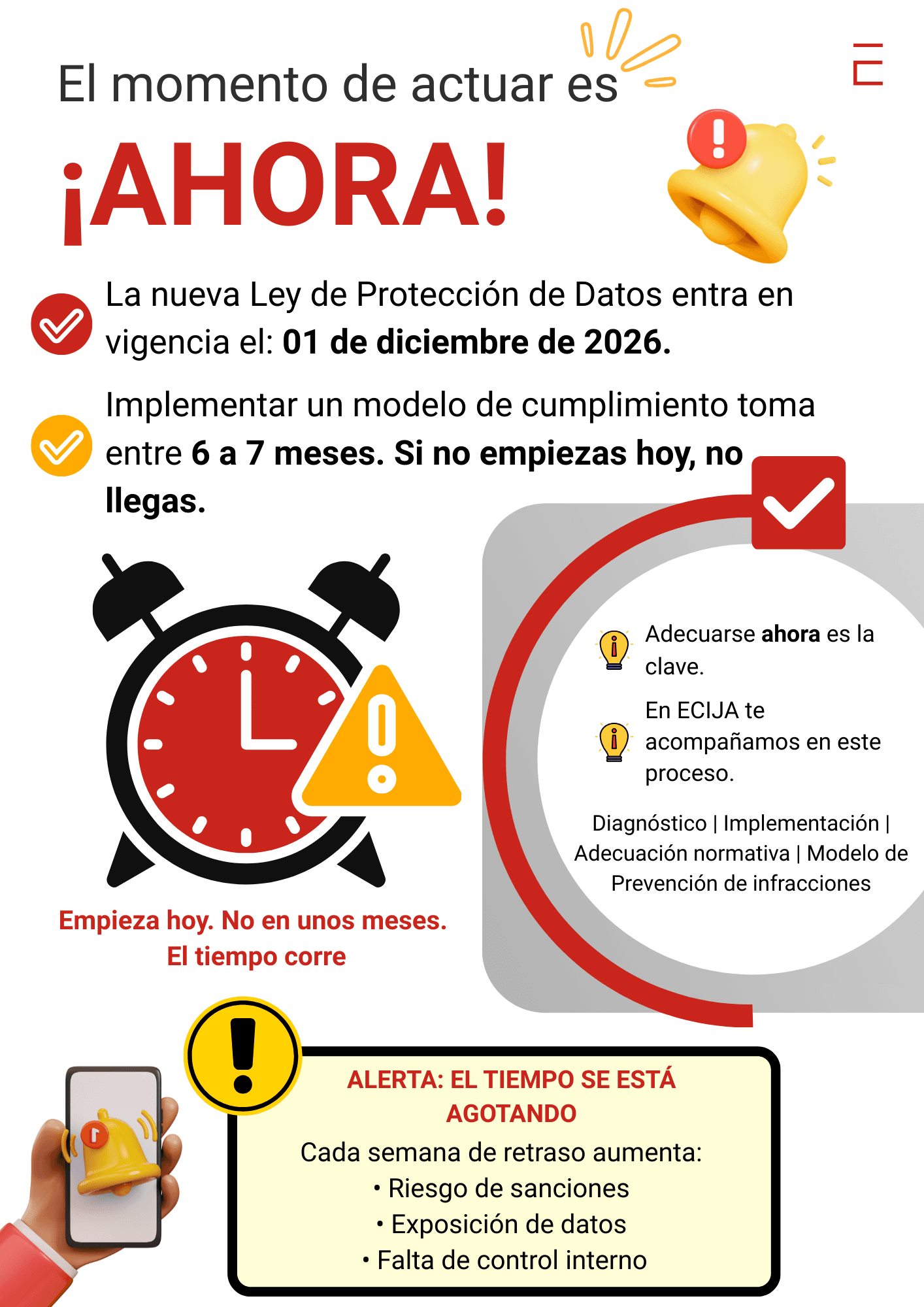
The entry into force of the new regulations in Chile marks a significant change in the way in which organisations will have to manage personal data. This new framework requires the adoption of concrete compliance measures, which implies implementation times that are not immediate.
In this context, postponing compliance can generate relevant risks, including exposure to sanctions, vulnerabilities in data processing and lack of internal control.
Therefore, anticipating is essential. At ECIJA Chile we accompany organisations throughout the compliance process, from the initial diagnosis to the implementation of a comprehensive compliance model.

Related professionals


LATEST FROM #ECIJA

It sets out new rules for the processing of personal data in debt collection procedures and communications with third parties.

A comparative analysis of the regulation, functions and requirements of the Data Protection Officer (DPO) in Chile and Spain, highlighting their strategic role in governance and compliance in the field of personal data protection.

The Managing Partner of ECIJA Chile has published a letter to the editor in *Diario Constitucional* in which he analyses the main challenges posed by the implementation of the new Personal Data Protection Act in Chile.

ECIJA Ecuador analyses the Joint ASEAN–RIPD Guidelines on international data transfers.

Most companies believe they have a clear understanding of what personal data they process. However, this perception is often limited to their customer database, when in fact the processing of personal data covers much more than that.

The initiative expands ECIJA's coverage in Navarra and incorporates a team of experts in taxation, labor law, commercial law, financial consulting, and international affairs.

The World Cup kicked off on June 11 in Mexico City and, for a little over a month, will be the most-watched event on the planet. Industry estimates point to a cumulative audience of nearly five billion people and more than USD 10 billion in additional global advertising spend. For fans, it is a celebration. For brands, it is the most coveted communications platform in the world.

Ten years after the GDPR came into effect, the certification mechanisms established in Articles 42 and 43 are emerging as advanced tools to demonstrate regulatory compliance in a verifiable and structured manner.

The episode opens up the debate on security, algorithmic governance, human oversight and the regulatory challenges faced by organisations and authorities in the face of a new generation of technological risks.